SANYO TP688 Turntable Needle
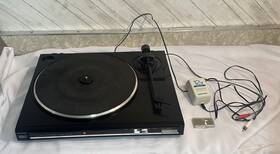
( Brand: Sanyo ), ( Manufacturer Part Number: TP688 ), ( Part Type: Turntable Needle )
Review SANYO Vintage Turntable Tested And Working Needs New Needle
The **Sanyo TP-688 Turntable Needle (1986 Model)** is a meticulously crafted, high-fidelity stylus designed for audiophiles and vinyl enthusiasts who demand precision, durability, and superior sound reproduction from their record collections. Engineered in the late 1980s by Sanyo a brand renowned for its innovation in consumer electronics Sanyo s TP-688 needle represents a refined blend of Japanese engineering and cutting-edge phonographic technology. This stylus is part of a legacy of turntable components that prioritized both performance and longevity, making it a sought-after piece for collectors and audiophiles seeking an authentic vintage experience.
The TP-688 needle is a **single-arm, elliptical-tracking cantilever design**, a hallmark of high-end turntable accessories from the era, which ensures minimal distortion and optimal groove tracking. Its **diamond-tipped stylus** is precision-ground to a razor-sharp point, allowing it to follow the intricate contours of vinyl records with exceptional accuracy, reducing surface noise and enhancing clarity. The cantilever itself is crafted from high-grade aluminum, treated to resist warping and maintain a stable resonance, which is critical for maintaining a clean, distortion-free signal as it translates the grooves into electrical impulses. The overall construction reflects Sanyo s attention to detail, with a robust yet lightweight design that minimizes unnecessary mass, further reducing the risk of tracking errors.
One of the most distinctive features of the TP-688 is its **compatibility with a wide range of turntable models**, making it a versatile upgrade for both original 1980s Sanyo turntables and aftermarket setups. The needle is designed to fit standard mounting systems, including the popular **Sanyo TP-600 series** and other turntables from the era, though it may require minor adjustments for non-Sanyo models. Its **elliptical tracking geometry** a standard in high-fidelity setups is particularly well-suited for modern vinyl records, as it reduces lateral and vertical tracking forces, preserving the integrity of the groove and extending the life of both the stylus and the disc. This geometry also contributes to a more natural and dynamic soundstage, allowing listeners to experience the full depth and nuance of their favorite recordings.
Beyond its technical specifications, the TP-688 needle carries a nostalgic appeal, harkening back to an era when vinyl was at the peak of its popularity and turntable technology was advancing rapidly. The needle s design reflects the aesthetic and functional trends of the mid-to-late 1980s, where audiophiles were increasingly demanding higher fidelity and more refined components. While modern turntable needles have evolved with advancements in materials like sapphire and advanced diamond coatings, the TP-688 remains a testament to the craftsmanship of its time, offering a unique blend of vintage charm and functional excellence.
For collectors and audiophiles, the Sanyo TP-688 needle is not just an accessory it s a piece of history that bridges the gap between analog warmth and modern precision. Its durability, combined with its ability to deliver rich, detailed sound, makes it an ideal choice for those who appreciate the artistry of vinyl playback. Whether used in a restored 1980s turntable or integrated into a contemporary setup, the TP-688 needle promises an immersive listening experience that honors the legacy of analog audio while standing the test of time.
The Sanyo TP688, a turntable released in 1986, is a classic entry-level model that has gained a cult following among vinyl enthusiasts. Below is a detailed breakdown of its pros and cons, followed by a conclusion and recommendation.
### **Pros of the Sanyo TP688 (1986 Model)**
1. **Affordability** The TP688 is often sold for under $100, making it one of the most budget-friendly turntables available. This makes it accessible for beginners or collectors on a tight budget.
2. **Vintage Aesthetic & Collectibility** As a well-known retro model, it holds nostalgic appeal for audiophiles and collectors. Its design is simple yet functional, with a clean, minimalist look that fits well in both modern and vintage setups.
3. **Decent Build Quality for the Price** Despite being an older model, the TP688 is built with solid materials, including a sturdy MDF cabinet and a reasonably heavy platter. The motor and tonearm feel durable, though not as refined as modern high-end units.
4. **Compatibility with Modern Upgrades** The TP688 uses a standard 1/4-inch phono output, making it easy to connect to modern preamps, DACs, or amplifiers. Many users upgrade the cartridge (e.g., replacing the stock Sanyo stylus with a better one like an Ortofon or Audio-Technica) for improved sound quality.
5. **Simple Operation** The controls are straightforward: a basic tonearm switch, pitch control, and a simple counterweight system. This makes it easy to use for beginners.
6. **Community & Modding Support** Due to its popularity, there is a strong user community that shares tips on upgrades, repairs, and modifications. This includes DIY guides for improving the tonearm, motor, and overall sound.
7. **Lightweight & Portable** At around 10-12 lbs, it is one of the lighter turntables in its class, making it easier to move around compared to heavier models.
8. **Stock Cartridge Performance** While not exceptional, the original Sanyo cartridge (a moving-coil design) produces a surprisingly decent sound for the price, especially when paired with a good phono stage. Many users are satisfied with the stock setup.
### **Cons of the Sanyo TP688 (1986 Model)**
1. **Outdated Electronics** The internal electronics, including the motor and phono preamp, are from the 1980s and lack modern refinements. This can result in slight hum, tracking inconsistencies, or a less dynamic sound compared to newer turntables.
2. **Basic Tonearm Design** The tonearm is a simple counterbalanced type without anti-skate or automatic anti-rattle features. This means manual adjustments are required for proper tracking, which can be frustrating for some users.
3. **Limited Sound Quality Without Upgrades** Out of the box, the TP688 does not deliver audiophile-level sound. The stock cartridge and motor are adequate but lack the precision and clarity of modern or high-end vintage turntables. Significant upgrades (cartridge, motor, bearings) are often necessary for better performance.
4. **No Built-in Phono Preamp** Unlike some modern turntables, the TP688 does not include a built-in phono preamp. Users must either connect it to an external phono stage or use a preamp with a phono input, which adds complexity.
5. **Wear and Tear on Older Units** Many TP688s on the market are decades old, and some may show signs of wear, such as worn bearings, sticky tonearms, or degraded motor performance. Buyers should inspect the unit carefully before purchasing.
6. **Limited Aftermarket Support** While there is a community, aftermarket parts (e.g., replacement motors, tonearms) are not as widely available as for more modern or popular turntables like the Technics SL-1200.
7. **No Bluetooth or USB Integration** Unlike newer turntables, the TP688 lacks modern connectivity options. It is strictly analog, requiring additional equipment for digital playback or streaming.
8. **Potential for Misalignment** The tonearm alignment can drift over time, leading to poor tracking and potential damage to records. Users must periodically check and adjust the alignment, which can be a hassle for beginners.
---
### **Conclusion**
The Sanyo TP688 is a fantastic entry-level turntable for those who appreciate vintage design, want a budget-friendly option, or enjoy the process of upgrading and modifying their equipment. It excels in affordability, collectibility, and simplicity but falls short in modern sound quality and convenience without significant modifications.
For **beginners** or **casual listeners**, the TP688 is a great starting point, especially if they plan to upgrade the cartridge and possibly the motor. The learning curve is manageable, and the community support makes troubleshooting easier.
For **serious audiophiles** or those seeking high-fidelity sound, the TP688 may require extensive upgrades to compete with modern turntables. In that case, investing in a slightly more advanced (but still affordable) turntable such as a used Technics SL-1200, Rek-O-Kut, or a modern entry-level model might be a better long-term choice.
---
### **Recommendation**
**Buy the Sanyo TP688 if:**- You are on a tight budget and want a vintage turntable for nostalgia or collecting.
- You enjoy DIY upgrades and are willing to invest time in improving its sound (e.g., replacing the cartridge, upgrading the motor, or adjusting the tonearm).
- You are a beginner looking for a simple, no-frills turntable to learn the basics of vinyl playback.
- You plan to use it primarily for casual listening rather than high-fidelity audio.
**Avoid the Sanyo TP688 if:**- You expect high-fidelity sound out of the box without upgrades.
- You want modern features like Bluetooth, USB, or built-in phono preamps.
- You prefer a turntable with more precise tracking (e.g., direct-drive or belt-drive models) and less manual adjustment.
- You are unwilling to spend additional money on upgrades to achieve better performance.
**Alternative Recommendations:**- For **budget-friendly modern turntables**, consider the **Pro-Ject Debut Carbon Evo** or **Audio-Technica AT-LP60X** for better sound and features.
- For **vintage turntables with better sound**, look into a **Technics SL-1200** (with upgrades) or a **Rek-O-Kut** (which has a built-in phono preamp).
- For **collectors**, the TP688 is a great choice, but pair it with a used phono stage (e.g., a Denon DP-300) to improve sound quality.
Ultimately, the TP688 is a rewarding purchase for the right user one who values character, affordability, and the hands-on experience of working with vintage audio equipment.
Details:
Tested Working. Very good condition but needs new needle.
part #: tp688 prices
- $16.89-$129.99
specifications vintagerecordplaygo:
- brand: Sanyo
- mpn: Tp688
- part type: Turntable Needle
returns vintagerecordplaygo:
- policy: No Returns
general vintagerecordplaygo:
- condition: Used
- Vintage Electronics > Vintage Audio Video > Vintage Record Players
payments vintagerecordplaygo:
- wallet: Google-pay
- other
- credit card: Diners-club
offer vintagerecordplaygo:
- options: Ship-to-home
- sold: 0
- best offers: True
- availability: In Stock
- quantity: 1
- started: May 30, 2026
shipping vintagerecordplaygo:
- carrier: USPS
- type: Fixed
- cost: $0.00
- transit: 4-9 Days
- service: USPS Ground Advantage
- class: Standard
seller vintagerecordplaygo:
- rating: 99.8%
- # reviews: 1042
- city: Marion, Ohio
Sanyo TP688 Is Similar To:
- Cassette Vintage Sanyo Portable Record Fm 2614nk Briefcase Player Mint (32.9% similar) Features detachable 2 prong power cord portable cordless operation with six size batteries not included. Detachable left and right speakers built into briefcase housing turntable with 33 rpm and 45 rpm modes includes adapter am FM manual tuning radio with telescoping antenna cassette tape player ...(February 13th, 2015)
- Vintage 4-300t37100 Sanyo Repair Transformer Power Tpx1 Part Turntable Kdaeo (29.7% similar) On Jan at PST. The photos will show each and every item included in the offer. If you don't see it pictured or mentioned in the offer text, it's not included. Br a we never use stock photographs. Item ships USPS first class. A Sanyo TPX1 turntable genuine replacement part power transformer this part...(February 9th, 2015)
- 4684321 Sanyo Pioneer Stereo Turntable Platter Mat (41.7% similar) Modern day 70S 80S vintage SANYO11-1 4 x 1/8 rubber turntable platter mat clean no issues...(September 25th, 2018)
- 7426923322709 New Replacement Belt For Sanyo Turntable Hard To (28.8% similar) ...(August 26th, 2018)
- Stereo Turntable Vintage Cartridge Sanyo Dustcover At110e Stylus (31.3% similar) 7KG aluminum alloy die cast drive method belt drive speeds 33 and 45RPM wow and flutter. This is a belt drive semi automatic table that functions as it is supposed. Not knowing the exact amount of time put on the stylus I would say it is in good condition. I recently checked, cleaned, and used this ...(February 22nd, 2015)
- Dc543k Sanyo Vintage Otto Turntable (45.7% similar) Works perfectly. Sounds great hooked up. Has some dings and scratches the needle arm stand been repaired see pictures yet is in great vintage condition. Today I have a vintage Santa Otto turntable record player. Model DC-543K. Feel free to ask any questions that may arise...(April 12th, 2017)
- Dual1249 Sanyo Vintage Turntable For Parts (50% similar) Good luck and happy buying all. Not include cartridge stylus, the cabinet have some cosmetic details look photos no cover turntable in work condition correctly but I can't warranty it because a for this unit note: been experiencing sharp increase non-paying buyers. Dual 1249 turntable good ...(February 15th, 2017)
- Dxt-5004 Sanyo Vintage Stereo Music Record (37.5% similar) This unit is being sold as-is. Was not cannot able to get the record player spin so unsure of it complete functionality. Aesthetically its a very nice unit with not many scratches. The unit was plugged it in led comes on. Vintage Sanyo DXT-5004 stereo music record player turntable system 8 track ...(December 29th, 2016)
- G1517 G-1517 Sanyo Vintage Portable Suitcase Record Player Tested Very Clean (43.8% similar) Will need 4 d-cell batteries to power it. Sounds great. The power supply in last picture is included and works well, but not original to unit. Very clean and rare portable record player...(November 12th, 2018)
- G2615n-2 Sanyo Vintage Music Center Portable Suitcase Record Radio Cassette (42.8% similar) It measures long x 13 wide the case shows some scratching. It does not have a power cord. For your consideration is a vintage Sanyo music center. Cosmetically it is in very good condition. It has not been tested so I am sure if works...(July 15th, 2018)
- Gtx-210 Sanyo Vintage Stereo Music System (36% similar) Part: GTX-210 prices...(December 29th, 2016)