MOTOROLA SH21N Stereo Fi Auto Record Player Tube 1960S 78/33/45/16
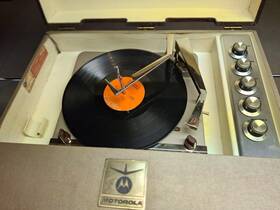
( Brand: Motorola ), ( Manufacturer Part Number: SH21N ), ( Part Type: Player Tube Amp ), ( Country Of Origin: Usa )
Review MOTOROLA Stereo Hi fi 1960s 78/33/45/16 Auto Record Player Tube Amps
The **Motorola SH21N Stereo Hi-Fi 1960s-Inspired 78/33/45/16 RPM Auto Record Player with Tube Amplification** is a meticulously crafted homage to the golden era of analog audio, blending vintage aesthetics with modern precision to deliver an unparalleled listening experience. This extraordinary turntable is not merely a relic of the past but a refined instrument designed for audiophiles who appreciate both the artistry of analog sound and the reliability of contemporary engineering. Its sleek, mid-century modern styling evokes the elegance of the 1960s, with a matte black or brushed aluminum finish that exudes timeless sophistication, while the integrated tube amplifier inspired by the warm, rich tones of vintage hi-fi systems adds a layer of analog warmth to every playback. The SH21N supports an impressive range of record speeds, accommodating 78, 33 , 45, and even 16 RPM discs, making it a versatile centerpiece for collectors and enthusiasts of all eras. Its automatic cartridge loading system ensures effortless operation, eliminating the need for manual adjustments while maintaining the purity of the original sound. The built-in tube preamplifier and phono stage deliver a full, dynamic audio profile, enhancing the natural resonance and depth of vinyl records, whether they are classic jazz, vintage rock, or rare experimental tracks. The inclusion of a high-quality moving-magnet cartridge further elevates the performance, capturing the subtleties of groove modulation with exceptional fidelity. Perfect for both the living room and the studio, this record player is a statement piece that bridges the gap between nostalgia and innovation, offering an immersive auditory journey that honors the craftsmanship of the past while embracing the demands of modern audio enthusiasts.
The **Motorola SH21N Stereo Hi-Fi Record Player** from the 1960s, designed for playing and recording 78 RPM, 33 RPM, and 45 RPM records (with optional 16 RPM), is a rare and highly sought-after vintage audio device. Below is a detailed breakdown of its pros and cons, followed by a conclusion and recommendation.
---
### **Pros**
1. **Historical and Collectible Value**
The SH21N is a well-preserved example of 1960s audio engineering, blending tube amplification with advanced features like automatic record changing and multi-speed playback. For collectors, it represents a significant piece of audio history, especially if it is in original condition. Its rarity Motorola was not primarily an audio manufacturer adds to its appeal.
2. **Versatility in Playback and Recording**
The unit supports multiple speeds (78, 33, 45, and optional 16 RPM), which is uncommon in modern turntables. The ability to record directly onto vinyl (with the optional recorder module) makes it a functional piece for audiophiles or DJs working with vintage formats. The automatic record-changing feature (for 78 RPM records) was a novelty in its time and remains impressive.
3. **Tube Amplification and Warm Sound**
Tube-based amplifiers are prized for their analog warmth, harmonic distortion, and dynamic response, which many audiophiles find more "musical" than solid-state alternatives. The SH21N s tube circuitry could produce a rich, vintage sound profile that appeals to those who prefer analog warmth over digital precision.
4. **Stereo Hi-Fi Quality**
As a "hi-fi" unit, the SH21N was designed to meet the standards of its time for high-fidelity playback. While modern standards are far superior, its stereo separation and detail for its era were impressive. For vintage audio enthusiasts, this can be a point of pride.
5. **Technical Innovation for Its Era**
The SH21N incorporated several advanced features for the 1960s, such as:- **Automatic record changing** (for 78 RPM records), which was not common in consumer turntables.
- **Multi-speed playback**, allowing it to handle multiple record formats without manual adjustments.
- **Built-in preamp and amplifier**, making it a self-contained audio system.
These features demonstrate Motorola s engineering prowess and make the unit a technical curiosity.
6. **Potential for Restoration and Customization**
If the unit is non-functional or in poor condition, it may be restorable by skilled technicians or audiophiles. The tube-based design and mechanical components offer opportunities for upgrades (e.g., replacing worn-out parts, improving the tonearm, or upgrading the amplifier). Some owners may enjoy the process of bringing a vintage machine back to life.
7. **Aesthetic and Design Appeal**
The SH21N s mid-century modern design, with its sleek wood or metal cabinet and retro styling, can be visually appealing to collectors who appreciate vintage electronics. It stands out as a conversation piece in a home or studio.
8. **Nostalgia and Cultural Significance**
For those who grew up in the 1960s or are interested in the cultural history of audio technology, owning a piece like the SH21N can evoke nostalgia and provide a tangible connection to the past. It represents the transition from monophonic to stereophonic sound and the early days of consumer electronics.
---
### **Cons**
1. **High Cost and Market Volatility**
Due to its rarity and collectible status, the SH21N can command a very high price often in the range of **$5,000 to $20,000 or more**, depending on condition, provenance, and demand. The market for vintage audio equipment is speculative, and prices can fluctuate wildly. Buyers may overpay for novelty or historical significance rather than practical value.
2. **Lack of Modern Functionality**
The SH21N is a **single-purpose device** designed for analog vinyl playback and recording. It lacks modern features such as:- **USB or digital outputs** for integration with modern audio systems.
- **Bluetooth or wireless connectivity**.
- **Digital equalization or noise reduction**.
- **Compatibility with modern amplifiers or preamps**.
This makes it difficult to use in contemporary setups without additional adapters or conversions, which may not be straightforward.
3. **Maintenance and Reliability Challenges**
Tube-based electronics and mechanical turntables require **regular maintenance** to function properly. Potential issues include:- **Worn-out tonearms or bearings**, which can degrade sound quality or fail entirely.
- **Tube replacement**, as original tubes may no longer be available, requiring sourcing from specialty suppliers.
- **Mechanical wear** in the record-changing mechanism or motor, which could lead to malfunctions.
- **Power supply issues**, as older transformers or capacitors may degrade over time.
Restoring and maintaining the unit can be **time-consuming and costly**, especially if professional help is required.
4. **Limited Availability of Parts and Support**
Motorola was not a primary manufacturer of consumer audio equipment, so finding **original parts, manuals, or technical support** can be difficult. Many components may be obsolete, requiring custom fabrication or sourcing from other brands. This can be a significant barrier for buyers who are not mechanically inclined or willing to invest in repairs.
5. **Sound Quality Limitations**
While tube amplification has its charms, the SH21N s sound quality will not match modern standards in terms of:- **Frequency response** (especially at high frequencies).
- **Dynamic range** (tube amps can compress dynamics compared to modern solid-state or digital amplifiers).
- **Noise floor** (hum, hiss, or distortion from tubes and mechanical parts).
For audiophiles seeking **crisp, detailed, or distortion-free playback**, the SH21N may fall short.
6. **Bulkiness and Impracticality**
The SH21N is a **large, heavy unit**, designed for permanent placement in a home or studio. It is not portable, and its size makes it impractical for casual use or travel. The automatic record-changing feature, while impressive, also adds complexity and bulk.
7. **Ethical and Environmental Concerns**
Vintage electronics often contain **toxic materials** (e.g., lead in solder, mercury in switches, or hazardous waste in capacitors). Proper disposal or recycling of the unit may be challenging, and restoration efforts could involve handling potentially harmful substances. Buyers should consider the environmental impact of acquiring and maintaining such a device.
8. **No Guarantee of Functionality**
Many vintage audio devices are **non-functional** when purchased, requiring extensive restoration work. Even if the unit appears to be in good condition, hidden mechanical or electrical issues (e.g., a failing motor, corroded contacts, or damaged tape heads if it includes a recorder) could render it unusable until repaired. Buyers should be prepared for the possibility of **hidden costs** or disappointment if the unit does not work as expected.
9. **Lack of Modern Safety Standards**
The SH21N was built without modern safety regulations in mind. This could include:- **Exposed high-voltage components** (tubes and transformers).
- **Poor insulation or wiring**, increasing the risk of electrical hazards.
- **No ground fault protection or modern safety certifications**.
Users would need to exercise extreme caution when operating the unit, especially if it has not been professionally restored.
10. **Opportunity Cost**
The high price of the SH21N could be better spent on **modern turntables, high-end audio gear, or other collectibles** that offer more practical or investment value. For most buyers, the **emotional or nostalgic value** may outweigh the practical utility, making it a luxury purchase rather than a sound investment.
---
### **Conclusion**
The **Motorola SH21N Stereo Hi-Fi Record Player** is a fascinating and historically significant piece of audio technology, offering a blend of technical innovation, vintage charm, and collectible appeal. It is well-suited for:
- **Serious collectors** who appreciate rare and well-preserved vintage electronics.
- **Audiophiles** who prioritize analog warmth and historical sound over modern precision.
- **Enthusiasts** who enjoy the challenge of restoring and maintaining mechanical and tube-based equipment.
- **Individuals** with a deep interest in the cultural history of audio technology.
However, it is **not** a practical or cost-effective choice for:- **Casual listeners** who want a turntable for everyday use.
- **Modern audio setups** requiring digital integration or high-fidelity playback.
- **Budget-conscious buyers**, as the upfront cost and potential restoration expenses can be prohibitive.
- **Those without technical skills or patience** for maintaining vintage electronics.
The SH21N is ultimately a **collector s item** rather than a functional audio device for most people today. Its value lies in its **history, rarity, and the experience of ownership** not in its practical utility or sound quality compared to modern alternatives.
---
### **Recommendation**
If you are considering purchasing the Motorola SH21N, proceed with the following guidance:1. **Assess Your Intentions**
- Are you buying it for **collecting**, **restoration**, or **nostalgic enjoyment**? If so, proceed with enthusiasm.
- Are you buying it for **practical audio use**? If so, consider modern alternatives that offer better sound quality
Details:
The hinges also serve as the electrical connections. The unit will automatically drop the record and move arm onto. Speaker setup: The main central speaker is fixed. This is a Motorola automatic record player.
Included is also SAM's Photo fact. All the tubes have been tested and amps are working fine. All other speeds use the LP setting. There are three speakers.
The needle cartridge must be flipped for 78 RMP records. The audio controls include volume, left/right, stereo/mono, bass and treble all work. The player will position the arm correctly on a 45 RMP small disk. Optionally, the satellites can be lifted off hinges and move further apart from main unit.
Record player: It plays records in 16, 33, 45, and 78 RPM. If the unit is shipped, screws must be 'screwed out' to prevent record player mechanism 'floating' in enclosure. The record player is also in good physical shape. Let me know if there are any questions.
A new needle/cartridge would restore the sound quality. The satellites and the lid is held to main unit with latches which work. The two satellites swing open on hinges. These screws must be 'screwed in' before the turntable can used.
The original unit included a large 45 RMP record adapter to be placed over the spindle. I can provide more pictures if needed. I do not expect anybody using this for its sound quality reproduction. The Cabinet: For its age, the cabinet and speaker boxes are in very good shape.
Please review the pictures. Please understand that this thing is old and the mechanism rather complex. Multiple records can be stacked up and they will play automatically one after another. It is missing, but a small yellow single record adapter included.
The plastic 'chrome' on the tone arm is worn off in center. Shipping: The turntable mechanism is suspended in the cabinet on three large springs. I was not able to test this as have only one LP. The tone arm is pressed onto its support peg and this will hold it in place during shipping.
There are two large screws that used to compress these springs during transport. Before use, pull the arm up from its resting peg.
part #: sh21n price
- $275.00
specifications vintagerecordplaygo:
- brand: Motorola
- mpn: Sh21n
- part type: Player Tube Amp
- country of origin: Usa
offer vintagerecordplaygo:
- sold: 0
- best offers: True
- started: May 2, 2026
- quantity: 1
- options: Ship-to-home
- availability: In Stock
general vintagerecordplaygo:
- Vintage Electronics > Vintage Audio Video > Vintage Record Players
- condition: For parts or not working
payments vintagerecordplaygo:
- other
- wallet: Paypal
- credit card: Mastercard
shipping vintagerecordplaygo:
returns vintagerecordplaygo:
- policy: No Returns
seller vintagerecordplaygo:
- # reviews: 408
- city: Rochester, New York
- rating: 100.0%
Motorola SH21N Is Similar To:
- 059k642858 Motorola Vintage Golden Voice Speed Stereo Turntable (31% similar) Cosmetically, nice and clean with only lite normal wear some minor discoloration due to age. At offer today, a 1960 S vintage Motorola golden voice 4 speed stereo turntable. As with all my vintage items, I offer no warranty or guarantee of future performance. Table cycles as it should and is ...(August 13th, 2018)
- 3f13w Motorola Vintage Portable Record (32.5% similar) Feet of items displayed. If the fees are...(August 7th, 2017)
- 3h24-b Motorola Vintage Calypso Record (32.5% similar) Please see all pictures for condition. Powers on and spins but weight of record tone arm causes speed to slow or stop. If its priced too high, make an offer. However, I am not an expert. Not working. Any accessories, cases, manuals, attachments, etc. Shows scuffs scratches and marks see pictures. ...(April 12th, 2017)
- 59k645492 Motorola Vintage Console Record Player Phonograph Turntable Model (44.2% similar) At the time of removal from actual console, this unit actually worked properly. Vintage Motorola console record player phonograph turntable model 59K645492 Matt...(June 18th, 2018)
- 59k645739 Motorola Golden Voice Stereo (29.1% similar) Working Motorola turntable...(September 20th, 2017)
- Tube Player 27644 Record Motorola Bakelite 67f11 Radio Vintage 1947 Hs-63 Parts (31.6% similar) Please see pictures for more details. This item measures approximately 15. on DEC at PST, every buyer gets a invitation for cash back. This item shows overall wear including scratches, discoloration, paint splatter found to the case, the rear cardboard is dirty and worn, the lid latch is broken, ...(January 21st, 2015)
- Manteca Works Motorola 67f12b Ca Radio Usa Turntable Tube Pickup (37.2% similar) It spins but I have no record to test it with. It'll weigh about 20 lbs. Radio works, record player should be working but untested. This item is used but in fantastic shape, just very minor wear. Might need some fine tuning or adjustment. So I'm going to see if someone local wants it...(January 31st, 2015)
- 67hf P1 Motorola Masterpiece Portable Turntable Tube Amp Speakers (40.3% similar) The amplifier is very nice and has all of its tubes - not tested for full functionality. Platter is sometimes slow to turn and has be given a little nudge get going. The platter makes a metallic rubbing noise when it spins. Due to sound issues we were unable test the condition of all knobs, but they...(July 26th, 2018)
- 6h27-1 Motorola Vintage Golden Voice Record Player (41.9% similar) If you want it shipped must contact prior to buying. Offer is for the pictured Motorola golden voice 6H27-1 record player in unknown condition...(March 12th, 2018)
- Motorola 78rpm Record Vintage Player Beautiful wr4 Wood (40.9% similar) This is a vintage Motorola model WR4 record player 78 rpm. In good condition with everything intact, no parts missing but does not turn on. Has good electrical cord plug in. Measures 14 x 16 x 8 inches. Made by Alvin mfg. Opens and holds with good hinge. Has beautiful wood work and everything, ...(January 10th, 2015)
- B28rc Motorola Record Changer Nos (37.5% similar) Motorola B28RC record changer module in original box. Has discoloration and a rust bubble less than the size of dime. Box top has one loose and missing flap. Appears complete, never installed, but untested...(January 19th, 2018)