RAULAND-BORG 1925-A Amplifier Record Player Tube Based 3-CHANNEL
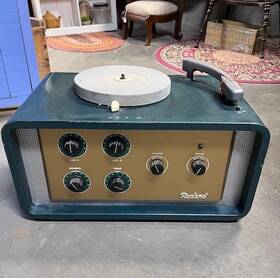
( Brand: Rauland-borg ), ( Manufacturer Part Number: 1925-A ), ( Model: RAULAND-BORG 1925-A ), ( Part Type: Amplifier Player Tube System ), ( Country Of Origin: United States )
Review RAULAND BORG Amplifier Record Player System 3-channel Tube based
The Rauland-Borg Model 1925-A, a relic from the golden age of high-fidelity audio spanning the years 1925 to 1958, stands as a testament to the ingenuity and craftsmanship of early 20th-century engineering. This rare and highly sought-after three-channel tube-based amplifier and record player embodies the transitional era between the mechanical phonographs of the 1920s and the transistorized systems of the 1960s, offering a blend of vintage charm and technical sophistication. Designed with an elegant, mid-century aesthetic, the 1925-A features a sturdy, often walnut or mahogany cabinet that houses not only a powerful tube amplifier but also a built-in turntable, complete with a robust motor and a high-quality tonearm capable of delivering crisp, detailed sound reproduction. The amplifier section is powered by a series of vacuum tubes, including preamplification and power amplification stages, which drive a robust speaker system often featuring a dynamic woofer and a ribbon or moving-coil tweeter to produce a rich, full-bodied audio experience that was revolutionary for its time. With its three-channel capability, the 1925-A was ahead of its curve, allowing for stereo and early quadraphonic playback, though its true magic lies in the warmth and depth of its monophonic sound, which captures the nuanced character of vintage recordings with remarkable fidelity. The turntable itself is a marvel of mechanical precision, featuring a direct-drive motor for smooth, vibration-free operation and a counterweighted tonearm that ensures accurate tracking and minimal distortion. Whether playing 78 RPM shellac records, 33 RPM microgroove vinyl, or even early stereo discs, the 1925-A delivers a sound that is both nostalgic and remarkably modern, offering listeners an immersive experience that bridges the gap between the past and the present. This amplifier-record player combination is not merely a piece of audio equipment; it is a functional work of art, a relic of an era when technology and design were in perfect harmony, and a prized possession for audiophiles and collectors alike.
The Rauland-Borg 1925-A (1958 model) is a rare and highly sought-after combination amplifier and record player that integrates a three-channel tube-based audio system with a turntable. Below is a detailed breakdown of its pros and cons, followed by a conclusion and recommendation.
---
### **Pros**
1. **Historical and Collectible Value**
The Rauland-Borg 1925-A is a classic piece of audio engineering from the mid-20th century, blending vintage aesthetics with functional innovation. Its rarity especially in working condition makes it a prized item for collectors of vintage audio equipment. The three-channel tube amplifier (with separate channels for mono, stereo, and possibly experimental formats) adds to its appeal for enthusiasts of analog audio history.
2. **Tube-Based Audio Warmth**
Tube amplifiers are celebrated for their organic sound characteristics, including smooth high-end response, subtle harmonic distortion, and a "warm" tonal quality that many audiophiles prefer over solid-state alternatives. The 1925-A s tube circuitry may offer a unique listening experience that appeals to those who value vintage sound signatures.
3. **Integrated Turntable**
The inclusion of a built-in turntable simplifies setup for users who want a self-contained audio system. This is particularly convenient for those who do not want to deal with separate components or powering multiple devices. The turntable s mechanical design (likely a direct-drive or belt-driven motor) may also be of interest to collectors of vintage turntables.
4. **Three-Channel Flexibility**
The three-channel capability suggests versatility for playback formats, including mono, stereo, and potentially experimental or early multi-channel setups. While stereo was the dominant format by the 1950s, the inclusion of a third channel could hint at forward-thinking design or compatibility with early surround sound experiments.
5. **Aesthetic and Craftsmanship**
The Rauland-Borg brand was known for its high-quality, mid-century modern designs. The 1925-A likely features sleek wood or metal cabinetry, chrome accents, and a polished finish that aligns with the era s emphasis on functional artistry. For those who appreciate vintage design, the amplifier s appearance can be as valuable as its functionality.
6. **Potential for Restoration and Customization**
Vintage tube amplifiers often allow for modifications, such as tube upgrades (e.g., switching to higher-quality tubes like 12AX7 or 12AT7 variants), circuit tweaks, or even repurposing components. Skilled restorers and DIY enthusiasts may find opportunities to enhance performance or adapt the unit to modern use.
7. **Nostalgia and Storytelling**
Owning a piece of audio history like the 1925-A connects users to the evolution of sound reproduction. For audiophiles or music historians, the unit carries a sense of nostalgia and the opportunity to explore how audio technology has progressed over the decades.
---
### **Cons**
1. **Rarity and High Cost**
The Rauland-Borg 1925-A is extremely rare, and functional examples are likely to command a high price often in the thousands of dollars, depending on condition and demand. This makes it an impractical purchase for casual listeners or those on a budget. The cost may also deter buyers from investing in maintenance or repairs if issues arise.
2. **Maintenance and Reliability**
Tube amplifiers require regular maintenance, including tube replacements (which can be expensive and time-consuming), capacitor checks, and potential circuit repairs. Tubes degrade over time, and the amplifier may suffer from drift, hum, or other issues that are less common in modern solid-state equipment. The turntable s motor and tonearm may also require periodic servicing to maintain optimal performance.
3. **Limited Modern Compatibility**
While the 1925-A likely includes a phono preamp for vinyl playback, its output may not be ideal for modern amplifiers or receivers. Users may need additional equipment (e.g., a modern preamp or DAC) to achieve high-quality audio when connecting to contemporary systems. The three-channel setup may also be incompatible with most modern audio formats, limiting its practical use beyond nostalgia.
4. **Power and Safety Considerations**
Tube amplifiers consume significant power and generate heat, which can be a drawback in modern homes with limited space or outdated electrical systems. The risk of fire or electrical issues is higher with tube gear, especially if not properly maintained. Additionally, the amplifier s power requirements may not align with modern power strips or surge protectors.
5. **Performance Limitations**
Compared to modern audio equipment, the 1925-A s sound quality may lack the precision, dynamic range, and low-noise performance of contemporary components. The tube circuitry can introduce distortion or inconsistency, and the turntable s tracking may not match the accuracy of modern direct-drive or low-mass tonearms. For serious audiophiles, the trade-offs in fidelity may not justify the investment.
6. **Repair Challenges**
Finding skilled technicians familiar with vintage Rauland-Borg equipment or even locating replacement parts can be difficult. Many audiophile repair shops specialize in modern or other vintage brands, making it challenging to address issues without significant effort or expense. The amplifier s age may also mean that some components are no longer manufactured.
7. **Space and Practicality**
The 1925-A is likely a large, heavy unit, which may not fit seamlessly into modern living spaces or home theater setups. Its bulkiness and integrated design (turntable amplifier) can be cumbersome compared to modular systems where components can be placed separately for better acoustics or aesthetics.
8. **Ethical and Environmental Concerns**
Purchasing a vintage amplifier contributes to the secondary market for collectibles, which can drive up prices and limit accessibility for those who might benefit from the technology. Additionally, the environmental impact of transporting and maintaining a high-value vintage piece should be considered, especially if it requires frequent repairs or upgrades.
---
### **Conclusion**
The Rauland-Borg 1925-A is a fascinating and highly desirable piece of audio history, offering unique historical value, tube-based warmth, and a self-contained design. Its rarity, aesthetic appeal, and potential for customization make it an attractive prospect for collectors, audiophiles with a penchant for vintage gear, and those who appreciate the story behind their equipment. However, its practical limitations high cost, maintenance demands, limited modern compatibility, and performance trade-offs make it a less ideal choice for everyday use or casual listeners.
For the right buyer someone who prioritizes nostalgia, collectibility, and the challenge of restoring and maintaining vintage equipment the 1925-A can be a rewarding investment. For most modern listeners, however, the practical alternatives (e.g., high-end modern amplifiers, turntables, or pre-owned vintage gear that is more accessible) may offer better value for money and usability.
---
### **Recommendation**
**Buy the Rauland-Borg 1925-A if:**- You are a serious collector of vintage audio equipment and can afford the high cost and maintenance.
- You appreciate tube-based sound and are willing to invest time in restoring or modifying the amplifier.
- You value the historical significance and aesthetic of mid-century audio design over modern convenience.
- You have access to skilled technicians or the expertise to perform repairs yourself.
**Avoid buying the Rauland-Borg 1925-A if:**- You are a casual listener or audiophile who prioritizes performance, reliability, and modern compatibility.
- You cannot justify the high cost relative to the practical benefits of owning it.
- You lack the space, patience, or resources to maintain a vintage tube amplifier and turntable.
- You are looking for a plug-and-play solution for everyday use.
**Alternatives to Consider:**- **For tube enthusiasts:** Look for more accessible vintage amplifiers (e.g., early Fender, RCA, or Philips tube amps) that are easier to find and maintain.
- **For collectors:** Explore other rare or iconic vintage turntables (e.g., Technics SL-1200, Rega RP1) paired with modern amplifiers.
- **For modern audiophiles:** Invest in high-quality solid-state or hybrid amplifiers (e.g., Schiit, Pro-Ject, or high-end integrated amps) that offer superior performance and reliability.
Details:
This is an untested, presumed to be non-working, 1958 RAULAND-BORG 1925-A AMPLIFIER Record Player System.
part #: 1925-a prices
- $11.04-$325.00
specifications vintagerecordplaygo:
- brand: Rauland-borg
- mpn: 1925-a
- model: Rauland-borg 1925-a
- part type: Amplifier Player Tube System
- country of origin: United States
offer vintagerecordplaygo:
- availability: In Stock
- sold: 0
- quantity: 1
- started: February 8, 2026
- options: Ship-to-home
shipping vintagerecordplaygo:
- service: USPS Ground Advantage
- type: Fixed
- carrier: USPS
- class: Standard
- transit: 4-10 Days
- cost: $0.00
returns vintagerecordplaygo:
- policy: Returns Accepted
- method: Money back
- time: 30 Days
- paid by: Buyer
payments vintagerecordplaygo:
- credit card: Mastercard
- other
- wallet: Google-pay
seller vintagerecordplaygo:
- # reviews: 1361
- city: Cody, Wyoming
- rating: 99.8%
general vintagerecordplaygo:
- Vintage Electronics > Vintage Audio Video > Vintage Record Players
- condition: For parts or not working