BRUNSWICK 120568 Phonograph
( Brand: Brunswick ), ( Manufacturer Part Number: 120568 )
Review BRUNSWICK Portable Phonograph
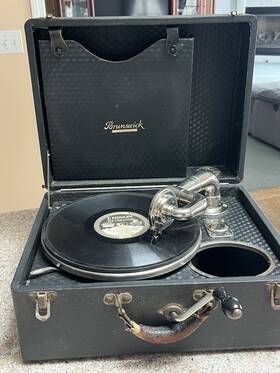
The **Brunswick 1923 Model 120568 Phonograph** is a stunning and meticulously crafted example of early 20th-century audio engineering, embodying the elegance and innovation of the golden age of phonographs. This rare and highly sought-after model represents the pinnacle of Brunswick s contributions to the music industry, blending robust mechanical design with the timeless allure of vintage audio technology. The phonograph features a classic, ornate cabinet constructed from high-quality hardwood, likely mahogany or walnut, showcasing intricate woodwork with raised paneling, rounded edges, and a polished finish that exudes sophistication. The front panel is adorned with a brass or nickel-plated grille, allowing for both aesthetic appeal and functional ventilation, while the top often includes a decorative medallion or monogram, adding to its refined appearance.
At the heart of this phonograph lies a finely tuned mechanical system, including a robust motor likely an electric AC induction motor paired with a durable, cast-metal tonearm that delivers precise needle placement for optimal sound reproduction. The turntable, typically made from heavy-duty metal or cast iron, is designed to minimize vibration, ensuring clear and consistent playback of 78 RPM records, which were the standard at the time. The phonograph s internal components, such as the counterweight and anti-skating mechanism, reflect Brunswick s attention to detail, allowing for smooth operation and reduced wear on both the record and the stylus. The overall build quality speaks to the durability and reliability expected of a product from this era, making it a prized possession for collectors and enthusiasts alike.
Beyond its technical merits, the Brunswick 1923 Model 120568 phonograph carries a rich historical significance, having been produced during a time when phonographs were not merely entertainment devices but symbols of cultural and technological progress. The model s association with Brunswick, a company renowned for its contributions to both music and sports equipment, adds a layer of prestige. Whether used for listening to classic jazz, blues, or early pop records, this phonograph offers a tangible connection to the past, allowing modern listeners to experience the warmth and depth of analog sound in its purest form. For those who appreciate the artistry of vintage design and the craftsmanship of early audio technology, the Brunswick 1923 Model 120568 phonograph stands as a remarkable testament to a bygone era of innovation and elegance.
### **Pros and Cons of buying a Brunswick 1923 Phonograph (Model 120568)**
#### **Pros**
1. **Historical Significance and Collectibility** This phonograph is a rare and well-preserved example of early 20th-century technology, making it highly desirable for collectors of vintage audio equipment. Its age and condition can significantly increase its value over time.
2. **Functionality and Playback Quality** Despite its age, the Brunswick 1923 phonograph is designed to play 78 RPM records, which were the standard format before the mid-20th century. If you have access to original 78s or high-quality reproductions, it can provide an authentic listening experience.
3. **Aesthetic and Craftsmanship** The phonograph features classic woodwork, brass accents, and a sturdy build, reflecting the high-quality manufacturing standards of the era. Its vintage design adds charm to a room, making it a decorative piece as well as a functional one.
4. **Potential for Restoration and Customization** Many vintage phonographs can be restored or modified to improve performance. With the right expertise, you could upgrade the tonearm, motor, or pickup to enhance sound quality and longevity.
5. **Nostalgia and Educational Value** Owning such a piece allows you to experience the technology of the early 1900s firsthand, offering insight into how music was consumed before electric amplification and modern formats.
---
#### **Cons**
1. **Limited Compatibility with Modern Media** The phonograph is designed exclusively for 78 RPM records, which are no longer mass-produced. Finding original 78s can be difficult, and even then, many are fragile and prone to damage. Digital or vinyl alternatives (like 33 RPM or 45 RPM records) will not work without adapters or modifications.
2. **Maintenance and Wear** Vintage phonographs require careful handling to avoid damage to the motor, tonearm, or record player mechanism. Dust, misalignment, or mechanical wear can degrade performance over time, and repairs may be costly or difficult to source.
3. **High Cost of Acquisition and Restoration** Due to its rarity, a well-preserved Brunswick 1923 phonograph can command a high price, often in the thousands of dollars. Restoration costs (if needed) can add significantly to the total investment.
4. **Sound Quality Limitations** Early phonographs were not designed for high-fidelity audio. The tonearm, pickup, and motor may produce a less refined sound compared to modern turntables, especially for contemporary music.
5. **Space and Practicality** The phonograph is a large, bulky item that requires dedicated space. If you do not have a collection of 78s or do not plan to use it frequently, it may end up being more of a decorative piece than a practical one.
6. **Risk of Damage or Theft** Vintage collectibles are often targeted by thieves or damaged by improper handling. Storing it securely and ensuring it is properly maintained is essential to preserve its value.
---
### **Conclusion**
The Brunswick 1923 phonograph (Model 120568) is a remarkable piece of history with undeniable charm and collectible value. It offers a unique opportunity to experience early 20th-century technology and enjoy music in its original format. However, its practical limitations such as compatibility issues, maintenance requirements, and the scarcity of 78 RPM records make it a less ideal choice for casual listeners or those seeking modern audio functionality.
If you are a serious collector, a music enthusiast with access to 78 RPM records, or someone who appreciates vintage craftsmanship, this phonograph could be a worthwhile investment. For others, the costs and challenges may outweigh the benefits, making it more of a niche purchase than a versatile audio device.
### **Recommendation**
- **Buy if:** You are a collector with a passion for vintage audio equipment, have access to 78 RPM records (or are willing to invest in them), and are prepared for the maintenance and potential restoration costs. You also appreciate the historical and aesthetic value of the piece.
- **Avoid if:** You primarily listen to modern music, prefer digital or vinyl formats, or do not have the space or resources to properly care for and maintain the phonograph. If you are not deeply invested in the collectible aspect, a modern turntable or a high-quality vintage phonograph with broader compatibility may be a more practical choice.
Details:
Excellent condition and fully functional. Includes crank and extra needle.
part #: 120568 price
- $500.00
specifications vintagerecordplaygo:
- brand: Brunswick
- mpn: 120568
shipping vintagerecordplaygo:
- service: USPS Ground Advantage
- cost: $99.00
- type: Calculated
- transit: 4-8 Days
- carrier: USPS
- class: Standard
seller vintagerecordplaygo:
- rating: 0.0%
- city: Cheshire, Connecticut
- # reviews: 0
payments vintagerecordplaygo:
- credit card: Diners-club
- other
- wallet: Google-pay
returns vintagerecordplaygo:
- policy: No Returns
general vintagerecordplaygo:
- condition: Used
- Vintage Electronics > Vintage Audio Video > Vintage Record Players
offer vintagerecordplaygo:
- availability: In Stock
- sold: 0
- best offers: True
- started: February 17, 2026
- options: Ship-to-home
- quantity: 1
Brunswick 120568 Is Similar To:
- 136110 Brunswick Panatrope Hand Crank Record Player Phonograph (50.5% similar) Brunswick pinstripe phonograph beautiful vintage piece of history need to be fixed redone not sure if it work no crank estate sale find...(March 12th, 2018)